A first assessment should create direction—not anxiety
Walking into an assessment can feel oddly personal. You may be asked about goals, old routines, movements that feel uncertain, and the reasons previous plans fell apart. None of that is a test of whether you are “fit enough” to begin. It is context a coach can use to avoid handing you a generic program.
Because every facility uses the word assessment differently, ask what the appointment includes before you arrive. OverallDevelopment lists a strength-assessment inquiry through The Body, but the exact format should come from the team—not assumptions made by an article.
Scope: A fitness assessment is not medical diagnosis or clearance. Pain, injury, or health concerns belong with an appropriately qualified healthcare professional.
Bring the story behind your training—not a polished answer
Write down what you have done recently, what you enjoyed, what you stopped doing, and why. A few honest notes are more valuable than trying to remember every program you have ever followed. Include long gaps. Include the workout you loved but could never fit into your schedule. That is the material a coach can actually work with.
Bring your real goal too. “Get stronger” is a fine beginning, but it becomes more useful when attached to life: carrying things without hesitation, returning to a sport, feeling more confident under a bar, or rebuilding a weekly routine. Specific context helps the conversation stay grounded.
- Recent training and long breaks
- Movements you enjoy, avoid, or do not understand
- The practical reason strength matters to you
Expect observation, questions, and a starting point
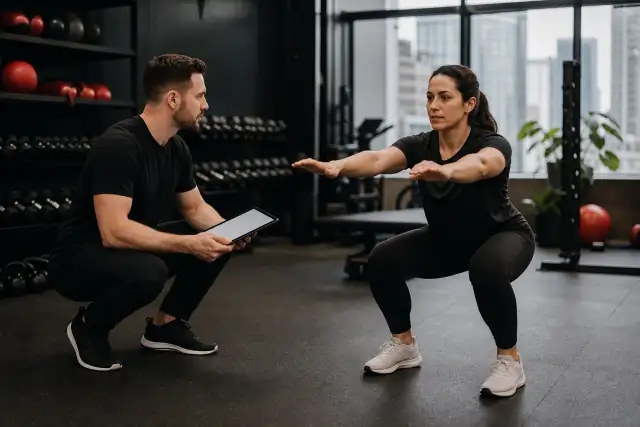
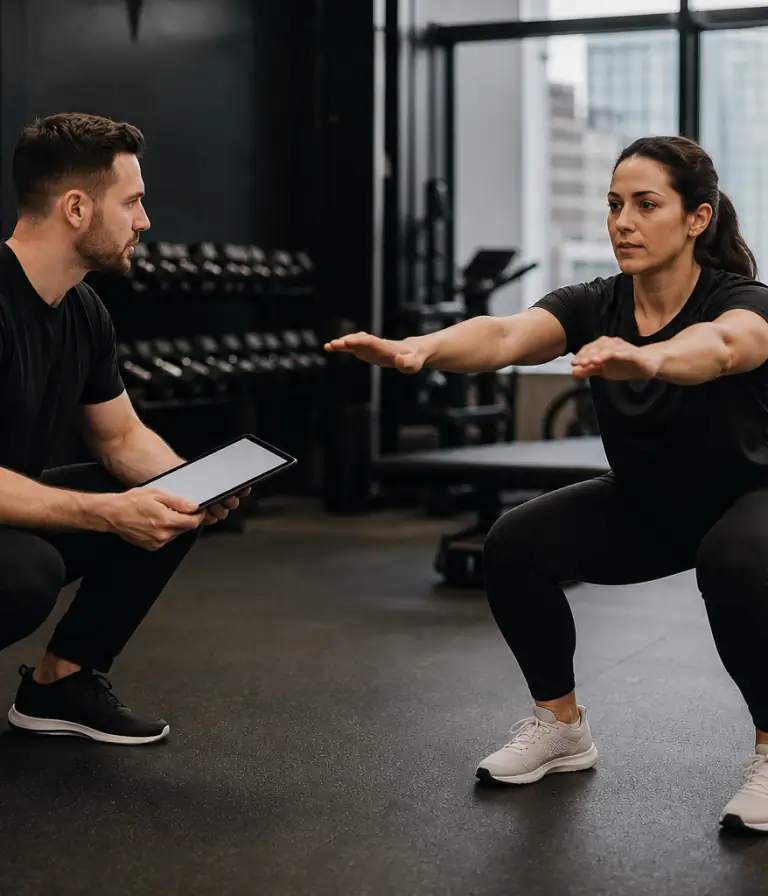
A coach may ask you to perform simple movements, but the purpose should be explained. The useful question is not whether you can impress anyone on day one. It is whether the coach can see how you currently move, how you respond to instruction, and where the program should begin.
If a movement makes you uneasy, say so before trying to power through it. A coaching conversation should leave room for questions. Ask what the coach is observing and how that observation will affect your first few sessions. You should leave understanding the next step, not simply holding a score.
- What movements will we review?
- Why are those movements relevant to my goal?
- How will today’s observations shape the program?
Know when a fitness question becomes a health question
Coaches can discuss training history, technique, effort, and programming within their scope. They should not turn an assessment into a medical diagnosis. If you have pain, a recent injury, unexplained symptoms, or a condition that may affect exercise, ask the appropriate healthcare professional what is safe before treating a gym appointment as clearance.
That boundary is a sign of professionalism, not a lack of expertise. A coach who is comfortable saying “this needs a different professional” is protecting the work you may eventually do together.
- Share relevant health context before movement begins
- Do not use a fitness score as medical clearance
- Ask who to consult when a concern is outside coaching
Leave with a plan you can repeat back
Before the appointment ends, ask for the recommendation in plain language. What should you work on first? Which training format fits that work? How often would the coach want to see you? What can be practiced independently? If you cannot explain the proposed next step to yourself on the ride home, ask another question.
Use the personal-training overview to compare the recommendation with the current coaching path, or review the membership option if independent training is part of the plan. Then confirm availability, price, and terms before deciding.
- The first training priority
- The recommended service and frequency
- Current scheduling, price, and next step
Ask the questions you are tempted to save for later
If you are worried about being judged, say that. If you do not understand a movement, ask for another explanation. If the proposed schedule looks unrealistic, bring it up before it becomes your plan. The first meeting is exactly where those concerns belong.
Pay attention to how the coach answers. You are not only learning about the program; you are learning how communication will feel once the work gets harder. Clear, patient answers are part of the service.
- What happens if I cannot perform a movement?
- How do you explain changes to the program?
- What should I do between coached sessions?
Confirm the details that make the appointment real
Before you put the assessment on your calendar, confirm the location, arrival time, expected length, clothing or shoes to bring, current price, and cancellation policy. Small logistical surprises can make an already unfamiliar appointment feel more stressful than it needs to be.
Ask whether anything should be completed beforehand and whether you will receive a summary afterward. Then save the contact information somewhere easy to find. Preparation should make the day calmer, not turn it into homework.
- Date, arrival time, location, and duration
- What to wear or complete beforehand
- Current price, policy, and follow-up format