The practical answer first
ACSM's 2026 update says consistency matters more than complexity for most healthy adults beginning resistance training. A practical foundation is to train all major muscle groups at least twice each week and progress gradually. Many tools can work, and training to failure, choosing one equipment type, or using complex periodization did not consistently improve outcomes across the evidence ACSM reviewed.
Heavier loads, higher weekly volume, and faster intent can emphasize strength, muscle growth, and power respectively, but those are goal-specific refinements—not a command that every beginner should start there. Build a repeatable week first, use a manageable effort, and get qualified help when movement choices or health context require individual judgment.
- The 2026 ACSM position stand updated resistance-training guidance for healthy adults using 137 systematic reviews and more than 30,000 participants.
- The biggest practical step is moving from no resistance training to a routine you can repeat.
- Train the major muscle groups at least twice weekly and build gradually rather than chasing a perfect split.
- Machines, free weights, bands, bodyweight, and home-based training can all be useful tools.
- Goal-specific variables can refine a plan, but advanced methods are not general beginner requirements.
- A Chicago routine should include travel, changing time, a backup window, and the return trip—not only workout minutes.
A simpler evidence-based starting point for healthy adult beginners
In March 2026, the American College of Sports Medicine published its first major resistance-training position update since 2009. The authors synthesized 137 systematic reviews representing more than 30,000 participants. Their broad conclusion is more useful to a beginner than any perfect-looking workout: moving from no resistance training to regular resistance training produces the largest practical gain, while many details can be adjusted around a person's goal, preferences, access, and ability to keep going.
The update does not hand every adult the same routine. It reports which variables tended to strengthen particular outcomes in studies of healthy adults, then emphasizes progressive training that can be performed with machines, free weights, bands, bodyweight, or home-based options. This guide translates that evidence into questions and a Chicago scheduling framework. It does not calculate an individual's loads, select exercises for an injury, or replace medical or qualified coaching advice.
For a beginner, the useful order is foundation first, refinement later. Establish two realistic weekly opportunities, learn a manageable set of movements, record what happened, and make small changes only after the routine is repeatable. If technique, equipment, or program decisions remain uncertain, the personal-training path, training-membership path, and strength-assessment guide offer distinct next conversations.
Scope: This article provides general education for healthy adults. It is not an individualized exercise prescription, medical diagnosis, rehabilitation plan, or clearance to exercise. Pain, injury, unexplained symptoms, pregnancy-related questions, chronic conditions, medications, and other health concerns should be discussed with an appropriately qualified healthcare professional before relying on general training guidance.
ACSM changed the evidence base, not the need for a perfect workout

The 2026 ACSM position stand is an overview of reviews, meaning its authors evaluated results already synthesized across systematic reviews rather than presenting one new training experiment. Eligible reviews covered healthy adults age 18 or older who completed at least six weeks of resistance training. The evidence base included different ages, abilities, settings, tools, and programs. That breadth helps identify patterns, but it also explains why the document is not a single beginner template.
Across that evidence, resistance training improved strength, muscle size, power, muscular endurance, contraction velocity, gait speed, balance, and several measures of physical function compared with no exercise. The responsible translation is that resistance training can support multiple capacities. It is not that every person will experience the same change, on the same timeline, from any routine. Outcomes depend on participation, starting point, program execution, and individual context that a general article cannot determine.
ACSM's public guidelines announcement leads with the most important comparison: doing some resistance training versus doing none. Many prescription variables affected particular outcomes, but fewer variables changed results consistently than online fitness culture often suggests. A beginner can therefore spend less energy debating machines against dumbbells or perfect repetition tempos and more energy choosing a safe, understandable routine that fits ordinary life.
Keep the population boundary in view. The position stand addresses healthy adults and does not function as injury rehabilitation, clinical exercise guidance, or sport-specific programming. It also does not say details never matter. It says the broad benefits are available through multiple approaches and that selected variables can be manipulated when a specific outcome becomes the priority. Read every number in the update inside that context.
- Evidence base: 137 systematic reviews and more than 30,000 participants
- Population: healthy adults completing resistance training for at least six weeks
- Broad finding: multiple forms of resistance training improved multiple outcomes
- Boundary: research synthesis is not an individualized routine or medical clearance
Consistency beats complexity because a usable plan can accumulate work
ACSM's companion five-point infographic distills the update into a clear beginning: work the major muscle groups at least two days per week and build over time. That aligns with the CDC's adult activity guidance, which includes muscle-strengthening activity on two or more days each week alongside aerobic activity. Neither source requires a complicated body-part split for a general-health starting point.
Two days is useful because it is specific enough to schedule and flexible enough to survive a crowded week. It can mean two planned full-body opportunities rather than six aspirational visits. The article is intentionally not naming exercises, repetitions, or loads for a reader it has never assessed. The practical task is to reserve two windows in which all major regions can be addressed through movements and equipment the person can perform appropriately.
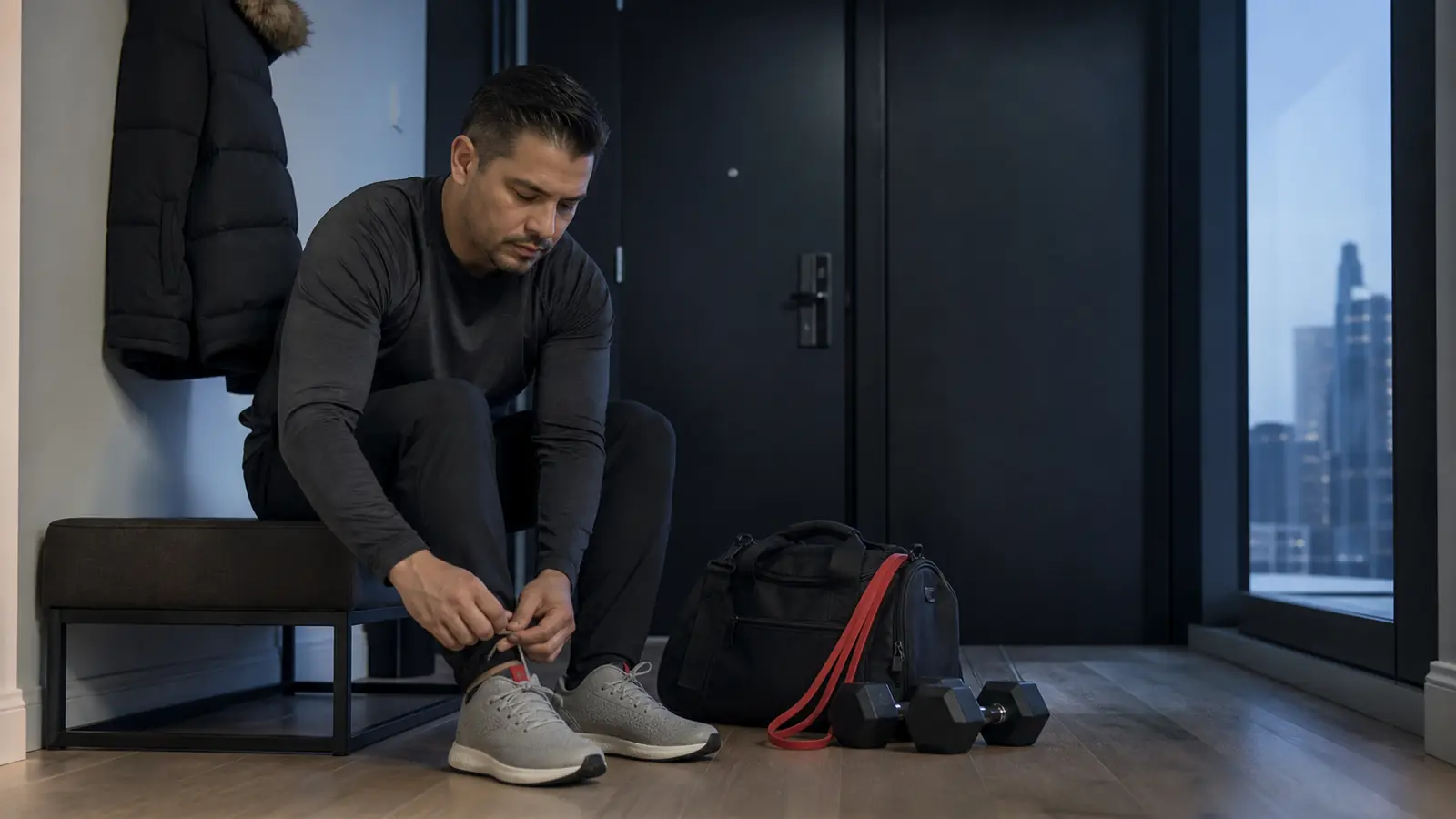
Consistency is not a character trait that appears after buying a membership. It is an environment you design. Put travel, changing, setup, and return time on the calendar. Decide what happens when work runs late. Keep the equipment choice simple enough that you can recognize what to do next. A routine becomes repeatable when fewer decisions are left to the moment you are already tired.
Avoid turning consistency into an all-or-nothing streak. Missing one session does not invalidate the week, and adding random punishment work does not repair it. Use the missed session as information: was the window unrealistic, the trip too fragile, or the plan too vague? Adjust the system, then return to the next planned opportunity. The goal at the beginning is a pattern you can observe and refine, not a perfect attendance identity.
- Reserve two realistic strength-training windows before adding more
- Include all major muscle groups across the week
- Put travel and setup time on the calendar with the session
- Treat a missed session as scheduling data, not proof that the routine failed
Use an anchor, a backup, and a complete door-to-door time block

Start with two anchor windows separated across the week when possible. For example, someone might protect an early-week evening and a weekend morning; another person may choose two lunch breaks. These are illustrations of scheduling, not prescribed training days. Test each window against the place you will actually leave—home, work, or school—and the time when Chicago traffic, transit, weather, and family obligations are most likely to affect the trip.
For each anchor, record five blocks: preparation, travel, training, changing or cleanup, and return. A forty-five-minute session can occupy much more of the calendar once the whole trip is counted. That is not a reason to abandon it. It is a reason to choose the correct calendar block. A plan feels unreliable when the workout is scheduled but the commute is expected to disappear.
Give each anchor one backup window that solves the same weekly need without requiring a perfect reroute. The backup may use a different day, a shorter trip, or appropriate equipment available at home. ACSM's update supports bands, bodyweight, and home-based resistance training as valid tools, so an alternate setting does not automatically make the week meaningless. The work still needs to be understandable and appropriate for the person using it.
Chicago weather deserves a contingency, not drama. In severe conditions, travel safety takes priority. During ordinary disruptions, check the live route before leaving and decide early whether the anchor or backup applies. After four weeks, review which window was actually used, how much door-to-door time it required, and where the friction appeared. That record is more valuable than copying a stranger's ideal weekly split.
- Anchor A: a preferred early-week opportunity with full travel time
- Anchor B: a preferred later-week opportunity with full travel time
- Backup: one appropriate alternate window or setting
- Review: actual attendance, total time, and the point where friction appeared
Equipment is a means of resistance, not a ranking of seriousness
The 2026 review did not find equipment type consistently changed the main outcomes. ACSM's public summary specifically recognizes machines, free weights, elastic bands, bodyweight, and home-based routines as useful approaches. That does not make every tool interchangeable for every movement or person. It means a beginner does not need to earn the right to train by using a barbell, nor dismiss a machine or band because it looks less advanced.
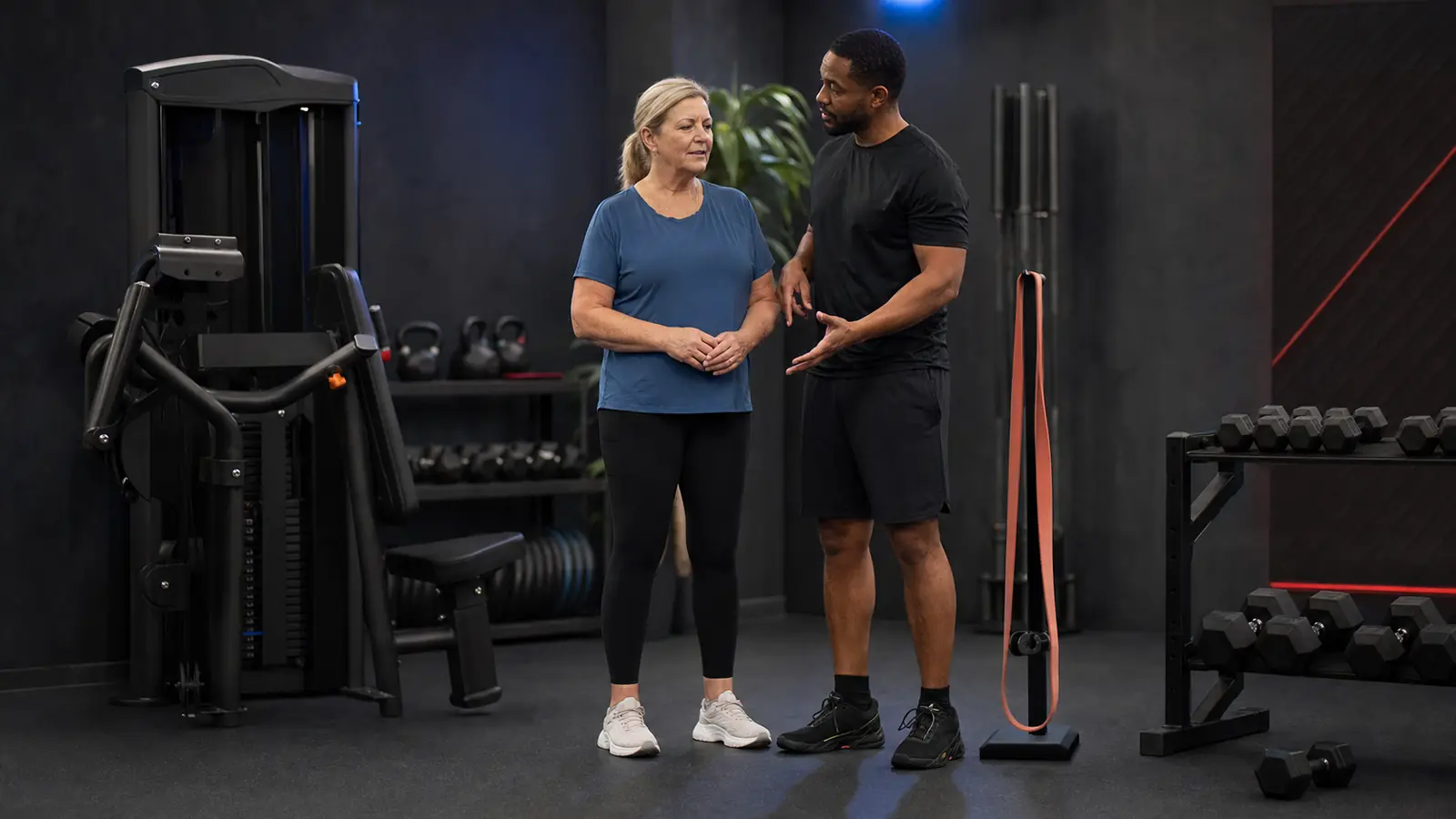
Choose tools by whether they allow the intended muscles to work through a controlled movement you understand, with an effort you can manage and a setup you can repeat. A machine may reduce setup decisions. A dumbbell may offer flexibility. A band may travel well. Bodyweight may remove an equipment barrier. Those are practical properties, not guarantees of safety or superiority.
Coverage matters more than collecting exercises. The CDC describes the major muscle groups as the legs, hips, back, abdomen, chest, shoulders, and arms. A beginner can use that list as an audit question: across the week, is the plan addressing the body broadly, or repeating only the easiest or most familiar movements? Translating that audit into specific exercise selection requires judgment about experience, technique, access, and limitations.
If you cannot set up a piece of equipment, do not guess under load. Read the available instructions, ask qualified staff for help, or choose an appropriate alternative you already understand. A training membership may fit people who can work independently and mainly need a consistent environment. Direct coaching may fit people who still need live instruction and program direction.
- Machines, free weights, bands, bodyweight, and home options can all be valid
- Select tools by repeatable setup, control, access, and fit for the intended task
- Audit broad weekly coverage instead of collecting novel exercises
- Ask for help rather than improvising with unfamiliar equipment under load
Load and sets can shape outcomes without becoming a beginner test
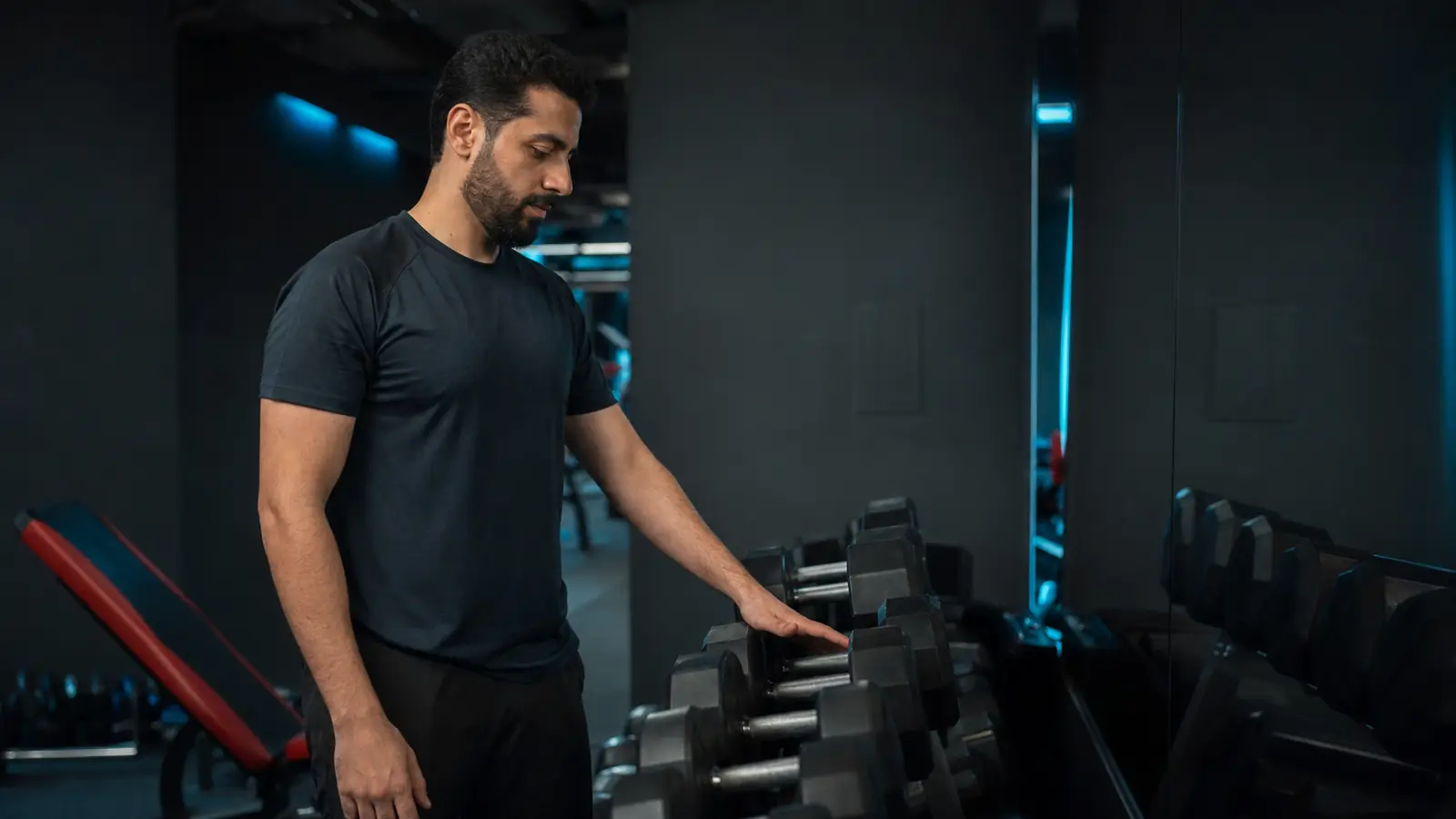
The position stand found that heavier loads—at least 80 percent of a one-repetition maximum—tended to enhance voluntary strength more than lighter loading. It also found strength benefits from two to three sets, full range of motion, placing priority exercises earlier, and training at least twice weekly. These are evidence patterns for emphasizing strength. They are not a direction for an unassessed beginner to test a maximum or immediately load every movement heavily.
A one-repetition maximum is the greatest load someone can lift once under defined conditions. Estimating or testing it involves technique, familiarity, and judgment that this article cannot provide. Beginners can understand the research without performing a maximal test. A qualified professional may use other observations or submaximal methods when appropriate, but the choice belongs inside an individual context.
Range of motion should also be read carefully. The evidence favored complete range of motion for strength, but complete means the intended movement range performed with control; it does not mean forcing a joint into pain or copying someone else's depth. Anatomy, experience, equipment, and health context vary. Pain or unexplained symptoms are reasons to stop treating a general article as instruction and consult an appropriately qualified professional.
Effort should make the working muscles do meaningful work while leaving technique and control intact. The review did not find training to momentary muscle failure consistently necessary for outcomes. That gives beginners room to learn without making every set an ordeal. Record the selected resistance, work completed, and a simple note about control. Let repeated sessions—not ego or online pressure—inform the next small change.
- Heavier loading is a goal-specific strength refinement, not a universal starting command
- A beginner does not need to test a one-repetition maximum to begin learning
- Use a controlled appropriate range rather than forcing motion through pain
- Training to failure was not consistently necessary across the reviewed evidence
Separate outcome-specific evidence from fitness-culture absolutes

ACSM reports different levers for different outcomes. Heavier loads tended to enhance strength. Higher weekly volume—about ten sets per muscle group—tended to enhance hypertrophy. Moderate loads moved with fast intent during the lifting phase supported power. Those statements describe ways programs may be refined for a defined objective. They do not mean a beginner should chase all three targets at once or copy numbers without an appropriate plan.
Hypertrophy means an increase in muscle size. The volume finding is often flattened into a universal weekly quota, but counting useful sets requires knowing which movements train which muscles, how the work is distributed, and whether the person can recover and repeat it. Power work adds speed and technical demands. It may be relevant to some goals, yet it is not a default assignment from a blog post.
The evidence also challenges several absolutes. Equipment category, training to failure, complicated periodization, time under tension, set structure, and exercise complexity did not consistently determine the main outcomes across the review. 'Not consistently' does not mean those choices are never useful. It means they should not be marketed as mandatory gates between a beginner and worthwhile training.
Use the comparison below as a claim-checking tool. When a program or social post makes an absolute statement, ask which outcome it addresses, which population it studied, and whether the method is necessary or merely one workable option. A clear goal can simplify decisions. A vague promise that every variable is essential usually creates more buying pressure than useful direction.
| Common claim | What the evidence says | Practical beginner reading |
|---|---|---|
| You need free weights for real results | Equipment type did not consistently determine outcomes | Choose a tool you can control and repeat |
| Every set must reach failure | Momentary failure did not consistently improve outcomes | Meaningful effort can be practiced without turning every set into a maximum |
| A complex periodized plan is required | Complex periodization did not consistently change outcomes | Build a repeatable foundation before adding complexity |
| One repetition speed is best for everything | Time under tension did not consistently determine outcomes; power has a fast-intent context | Match variables to goals instead of treating them as universal |
- Strength emphasis: heavier loads can be useful after an appropriate foundation
- Muscle-growth emphasis: weekly volume matters, but it must be counted and recovered from
- Power emphasis: speed-focused work is outcome-specific and may require coaching
- General beginning: regular progressive resistance training remains the common foundation
Make the next step small enough to evaluate
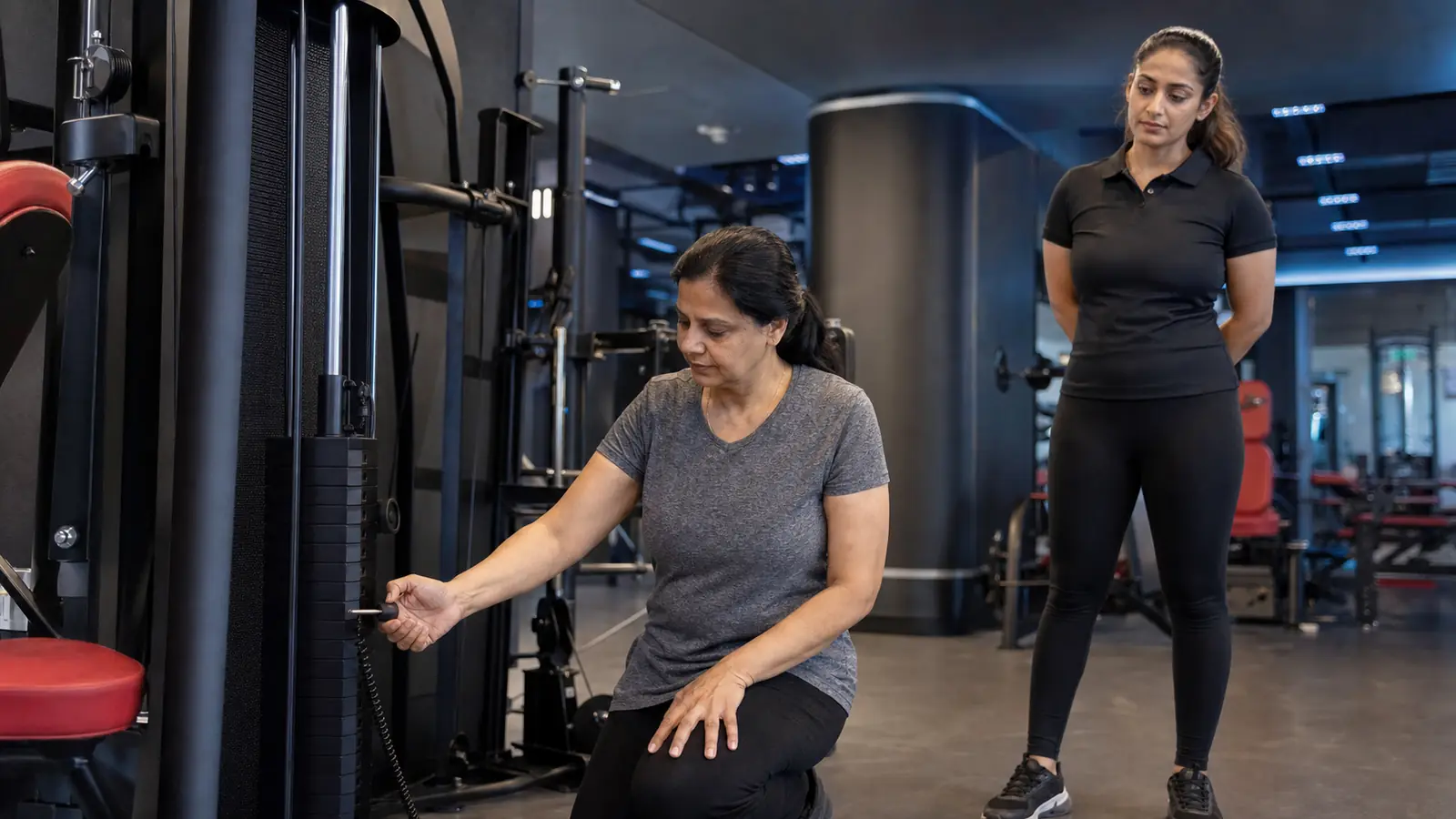
Progressive resistance training means the challenge changes as capacity and skill change. Progress does not require increasing weight every session. Depending on the plan and person, it may involve more controlled repetitions, an additional set, a modest resistance change, improved range, better consistency, or a movement progression. Because those choices interact, change one clear variable at a time when possible and observe what happens.
Keep a simple training record: date, movement or equipment, resistance setting, sets, repetitions, and a brief note about control or uncertainty. The record does not need to be a public performance dashboard. Its job is to reduce guessing. If the same work becomes more controlled across repeated sessions, that is useful information. If technique deteriorates or discomfort appears, adding challenge simply because the calendar changed is not evidence-based progression.
Recovery belongs inside the plan, but it does not need a collection of rituals. Leave enough time and flexibility to repeat the work with reasonable readiness. Sleep, other activity, work stress, and total training all affect how a week feels. This article cannot diagnose fatigue or tell an individual when they have recovered. It can recommend that progression be based on observed training, not on a predetermined demand to advance.
Review the record every few weeks and ask three questions: Did the planned sessions happen? Did the movements become clearer? Is the current challenge still appropriate? If attendance is inconsistent, repair the schedule before adding volume. If technique or selection remains unclear, seek coaching. If pain or health concerns appear, move the question outside a general fitness article and toward the appropriate healthcare professional.
- Progress can involve control, repetitions, sets, resistance, range, or movement choice
- Change a clear variable and observe it before changing several more
- Keep a private record that reduces guessing
- Repair schedule or technique problems before adding complexity
Use coaching when the missing piece is judgment, feedback, or structure
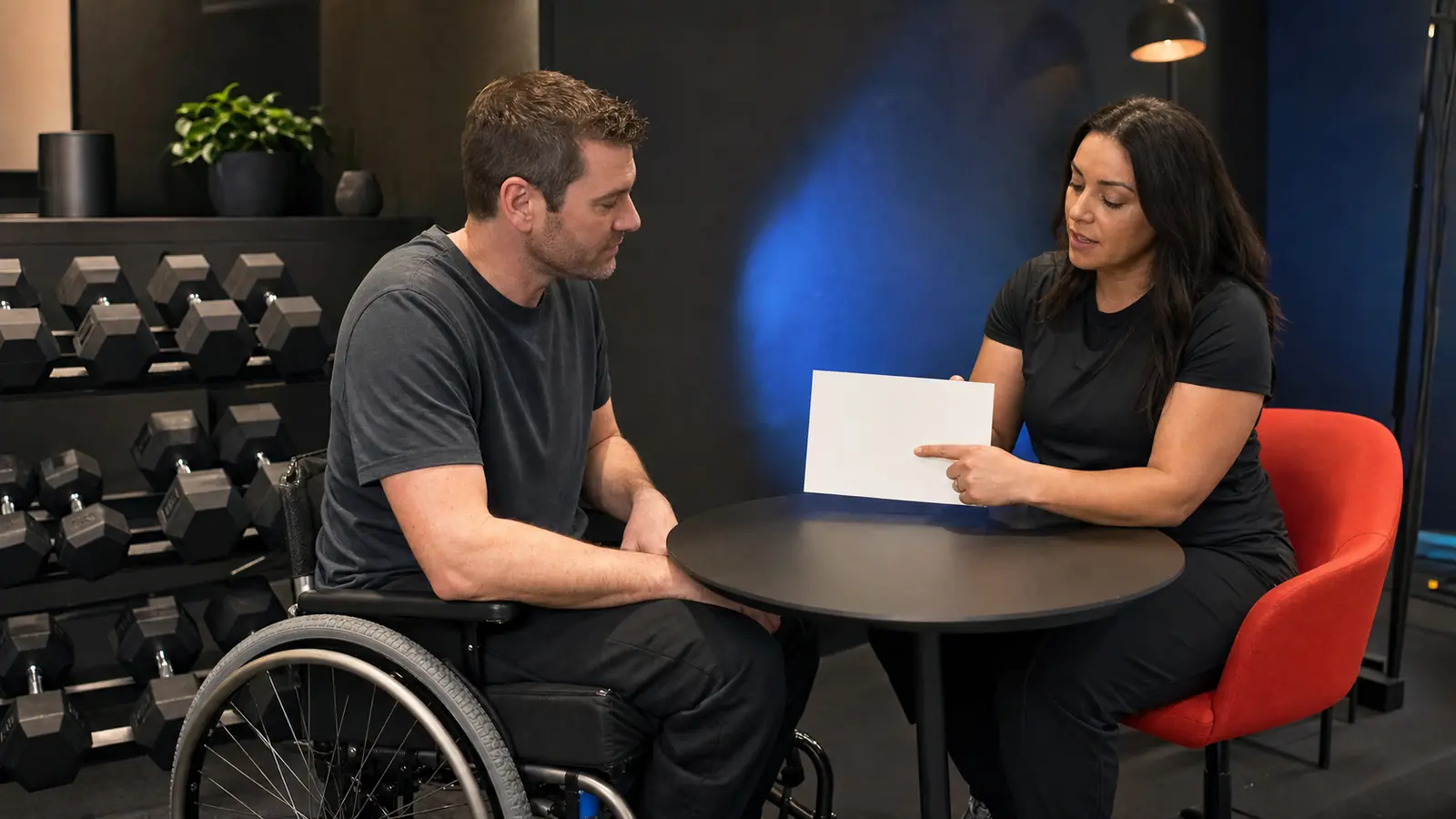
The ACSM update makes many training approaches valid, but having options can create a new beginner problem: deciding among them. Coaching may be useful when you want help selecting movements, learning equipment, understanding effort, organizing the week, or adjusting the plan. The value is not a dramatic promise. It is the quality of observation, explanation, and decision-making you receive.
Before choosing a service, write down the questions that require a person rather than an article. Which movements fit the goal and context? What does an appropriate starting effort look like? How will the plan be reviewed? What should happen between coached sessions? Ask who would provide the service, what the current process includes, and how scheduling works. Do not assume credentials, specialties, availability, or prices that have not been confirmed.
A strength-assessment conversation can help organize training history, goals, and questions before a coaching decision. A personal-training inquiry may fit someone seeking direct feedback and program direction. A training-membership inquiry may fit someone who can train independently and primarily needs access and rhythm. These are service distinctions, not claims about individual suitability.
Good boundaries are part of good support. A fitness professional can discuss training within their role, but should not turn a movement assessment into diagnosis or medical clearance. Tell the relevant professional about health concerns rather than hiding them to keep a plan moving. The strongest beginner path is not the most intense one; it is the one with the appropriate expertise for the question being asked.
- Seek coaching for live feedback, equipment learning, structure, or program decisions
- Confirm the current coach, process, scheduling, terms, and price directly
- Use membership when independent training is already appropriate
- Route medical and rehabilitation questions to qualified healthcare professionals
Use four ordinary weeks to test whether the system is workable
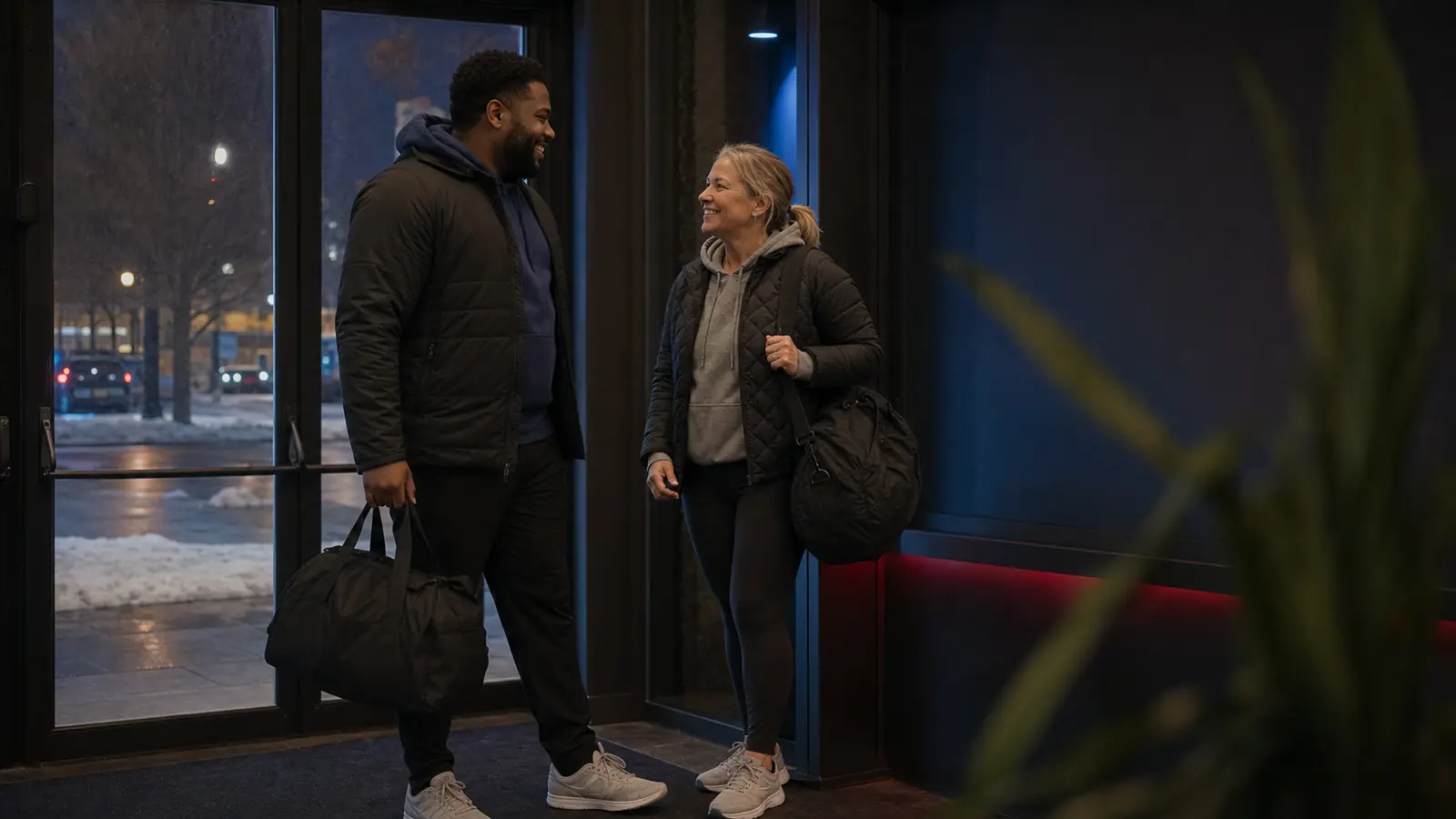
Begin with a planning period, not a transformation deadline. In week one, identify two anchor windows, one backup, the setting, and the source of instruction. Confirm any service details you need. In the following weeks, observe whether the windows work and whether the training decisions are clear. Four weeks is not a promise of a physical outcome; it is enough ordinary calendar time to expose obvious friction in the system.
Track process measures you can verify: planned opportunities, sessions completed, total door-to-door time, questions that came up, and whether you knew the next step. Avoid treating body weight, appearance, or a single performance test as the only proof that beginning matters. ACSM's evidence covers several functions and emphasizes regular participation; the first local problem is getting a suitable routine into real life.
At the review, keep what worked and change the smallest failing part. If the commute repeatedly breaks the evening anchor, test another window. If the workout is too vague, seek program guidance. If equipment setup creates uncertainty, ask for instruction. If the two anchors are stable, resist the urge to rebuild everything just because a more complicated plan appeared online.
The 2026 update reduces the pressure to optimize before participating. Start with regular progressive resistance training, broad muscle-group coverage, a manageable schedule, and tools you can use appropriately. Then refine the variables that match a defined goal. To discuss a current OverallDevelopment path, bring your schedule, training background, and unanswered questions to the team rather than asking a general article to make the decision for you.
- Week 1: choose anchors, backup, setting, and source of instruction
- Weeks 2–4: record attendance, total time, clarity, and questions
- Review: keep the working pieces and change the smallest source of friction
- Refine goal-specific variables only after the foundation is understandable
Questions people ask before they choose
What do the 2026 ACSM strength guidelines say a beginner should do first?
For healthy adults, the public ACSM summary emphasizes regular resistance training for all major muscle groups at least twice weekly and gradual progression. It also emphasizes choosing a routine that fits the person's goals, safety, comfort, and ability to continue. That is a foundation, not a complete individualized program or medical clearance.
Do beginners need barbells or a gym to benefit from resistance training?
No single equipment category was consistently required across the ACSM review. Machines, free weights, elastic bands, bodyweight, and home-based training can all be useful. The right tool still depends on whether a person can set it up, control it, and use it appropriately for the intended task. Ask for instruction when equipment is unfamiliar.
Should every strength-training set go to muscle failure?
ACSM reported that training to momentary muscle failure did not consistently improve the reviewed outcomes. That does not mean effort is irrelevant; it means failure is not a universal requirement. A beginner can focus on meaningful work with control and repeatability rather than treating every set as a maximum challenge.
Can the two weekly strength days be back to back?
The public guidance sets a weekly frequency foundation but does not make this article the place to prescribe an individual's spacing. Many people distribute sessions across the week, while schedule, total work, exercise selection, readiness, and health context affect the decision. A qualified professional can help when the appropriate arrangement is unclear.
How heavy should a Chicago beginner lift?
The ACSM paper found heavier loads tended to enhance strength, but that is an outcome-specific finding, not a direction for every beginner to test a maximum. Starting resistance should allow the intended movement to be performed with appropriate control. An article cannot select a safe load for an unassessed person, especially when pain, injury, or medical concerns are present.
Do I need a strength assessment or personal trainer before starting?
Not every healthy adult requires the same entry path. An assessment or trainer may be useful when you want movement feedback, equipment instruction, program direction, or help translating goals into a schedule. A fitness assessment is not diagnosis or medical clearance. Health concerns should be discussed with an appropriately qualified healthcare professional.
How this guide was built
OverallDevelopment prepared this guide from the primary sources below and the verified business information published on this site. AI-assisted editorial production and original AI-generated visuals were used; the visuals do not depict the facility, staff, clients, meals, or promised results.
- Resistance Training Prescription for Muscle Function, Hypertrophy, and Physical Performance in Healthy Adults: An Overview of ReviewsAmerican College of Sports Medicine / Medicine & Science in Sports & Exercise
- ACSM Unveils Landmark 2026 Resistance Training GuidelinesAmerican College of Sports Medicine
- 5 Things to Know About Creating an Effective Resistance Training PlanAmerican College of Sports Medicine
- Adult Activity: An OverviewCenters for Disease Control and Prevention
- Personal Training in ChicagoOverallDevelopment
- Training Membership in ChicagoOverallDevelopment
- Before a Chicago Strength AssessmentOverallDevelopment